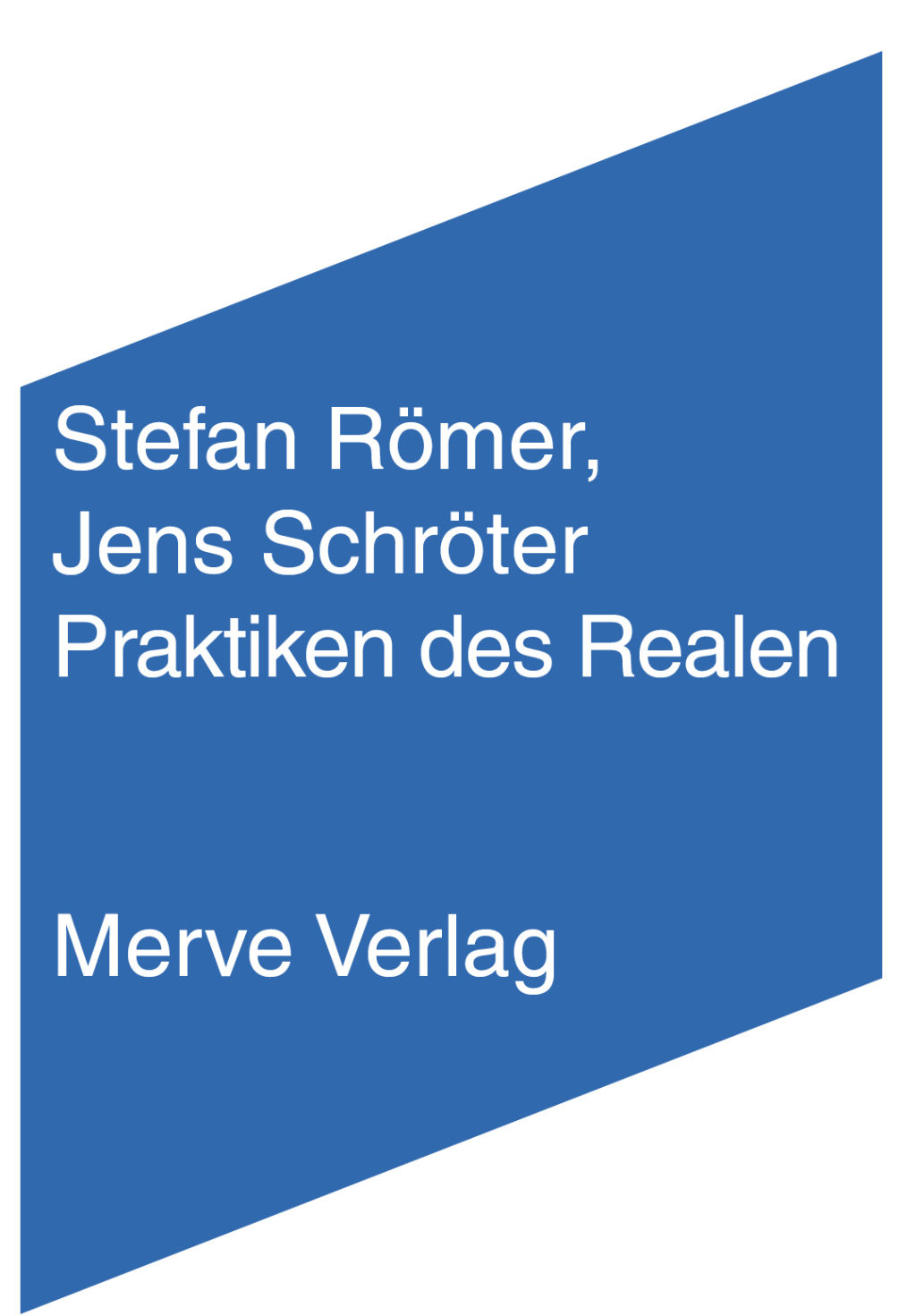
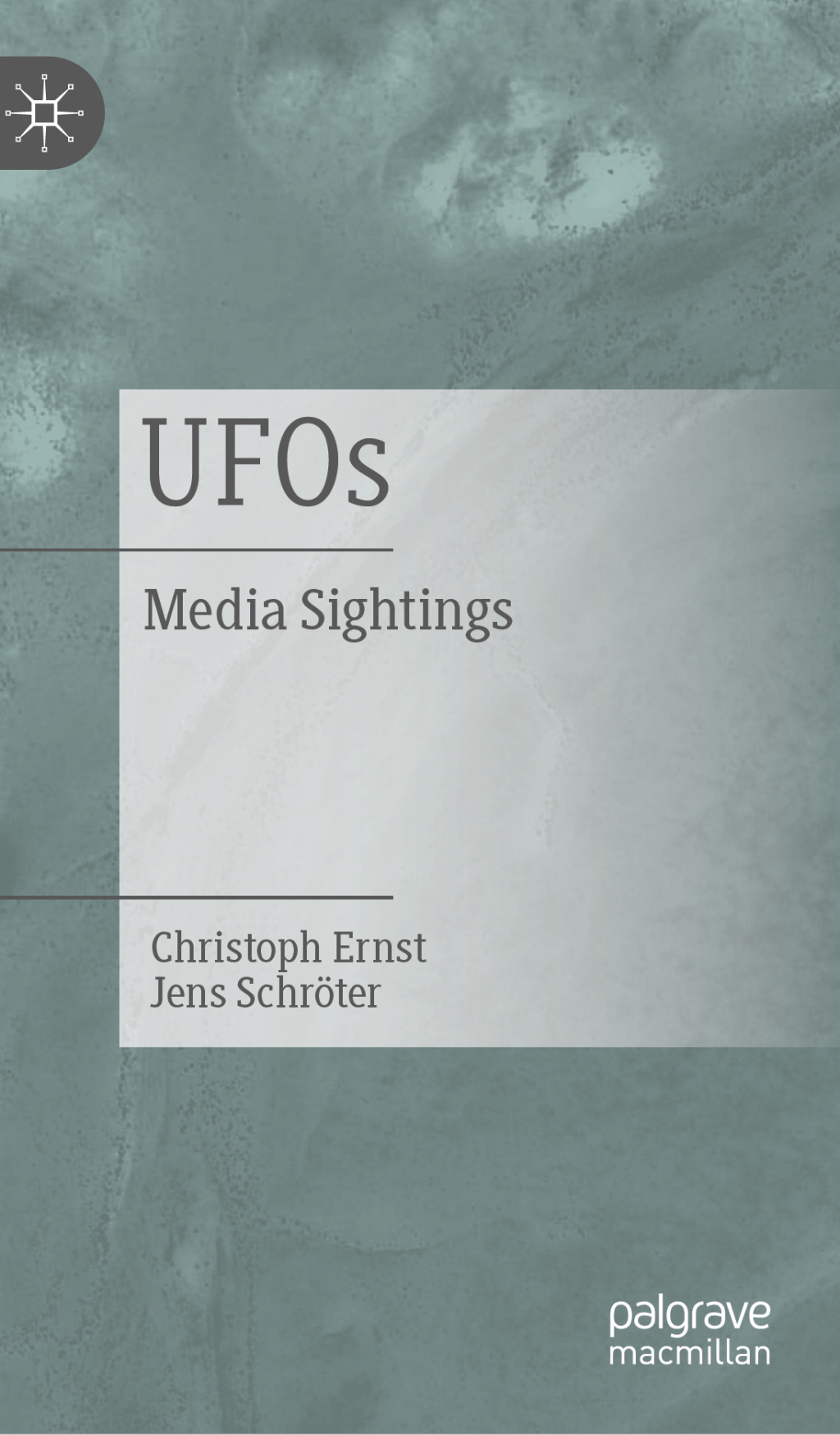
COMING SOON...
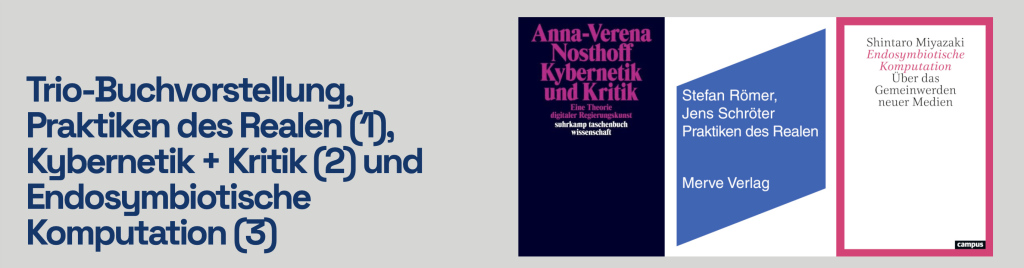
On 29.10. at the Medientheater der Humboldt-Universität Berlin (Georgenstrasse 47) our book will be presented alongside the books of Anna-Verena Nosthoff and Shintaro MIyazaki.

VISITING PROFESSORSHIP!
Masaryk University of Brno, Czech Republic
In November Prof. Schröter will have a visiting professorship at the Masaryk University in Brno!
(Image: Official logo of the university)

CfP!
BAUDRILLARD RECONSIDERED
CALL FOR ABSTRACTS: BAUDRILLARD RECONSIDERED
This journal collection (c. 90,000 words) will be published as a theme issue of Angelaki: Journal of the Theoretical Humanities in January 2029 (34.1). Angelaki (established 1993, based in Oxford, UK) is an internationally known journal of European philosophy and literary and cultural theory and criticism published by Routledge. Since 2025 the journal is online only. Open access material allowing, all Angelaki theme issues are considered for publication as books in the
Angelaki: https://www.tandfonline.com/journals/cang20
Issue Editors: Stefan Höltgen and Jens Schröter (University of Bonn, Germany)
Here is the Call! Abstracts until 15.11.2026, the selected abstracts should be developed into full papers until 1.8.2027.
https://arthist.net/archive/54521
(Image: Wikimedia Commons, By en:User:Europeangraduateschool - File:WikipediaBaudrillard20040612-cropped.png, CC BY-SA 2.5, https://commons.wikimedia.org/w/index.php?curid=49487283, processed with Claude Opus 5.5)


NEW FELLOWS AT THE CHAIR OF PROF. DR. JENS SCHRÖTER
Yue Yixin
Yue Yixin is a PhD candidate in Aesthetics at the School of Philosophy, Fudan University, Shanghai. Her research interests include media philosophy, film and moving-image theory, intermediality, visual culture, and German critical theory. From November 2026 to November 2027, she will conduct research at the University of Bonn under the supervision of Prof. Dr. Jens Schröter, supported by a fellowship from Fudan University.
Her research project, Messages and Their Echoes: A Study of Alexander Kluge’s Media Philosophy investigates the relationship between media, public experience, and critical knowledge in the works of German filmmaker and writer Alexander Kluge. Focusing on his films, television productions, interviews, and writings, the project examines how montage, repetition, and transformations across media reorganize images, narratives, and historical materials. By connecting Kluge´s artistic practices with his theoretical work on the public sphere and the institutional conditions of media production, the project explores how media can create spaces for critical reflection and public discourse.
Qiren Wang
In the era of algorithmic capitalism, the video game industry offers countless examples of how algorithms shape labor relations and market dynamics. This PhD-research examines the “Banana Game” a click-based game that has rapidly garnered significant attention since its release on April 24, 2024. By analyzing the “Banana Game”, it aims to explore how algorithms reshape labor relations and exacerbate labor alienation within platform capitalism, providing insights into algorithmic resistance strategies.
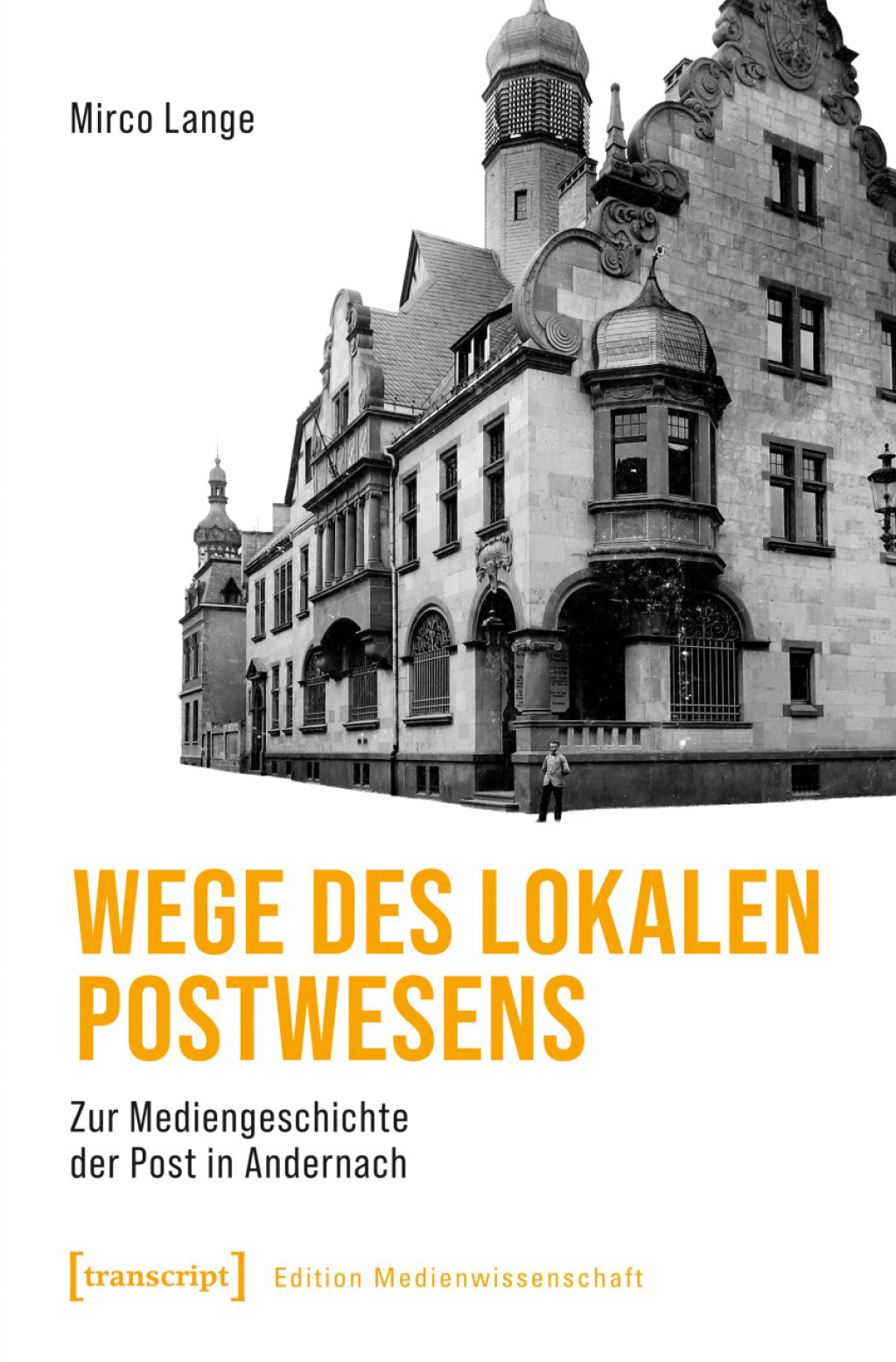
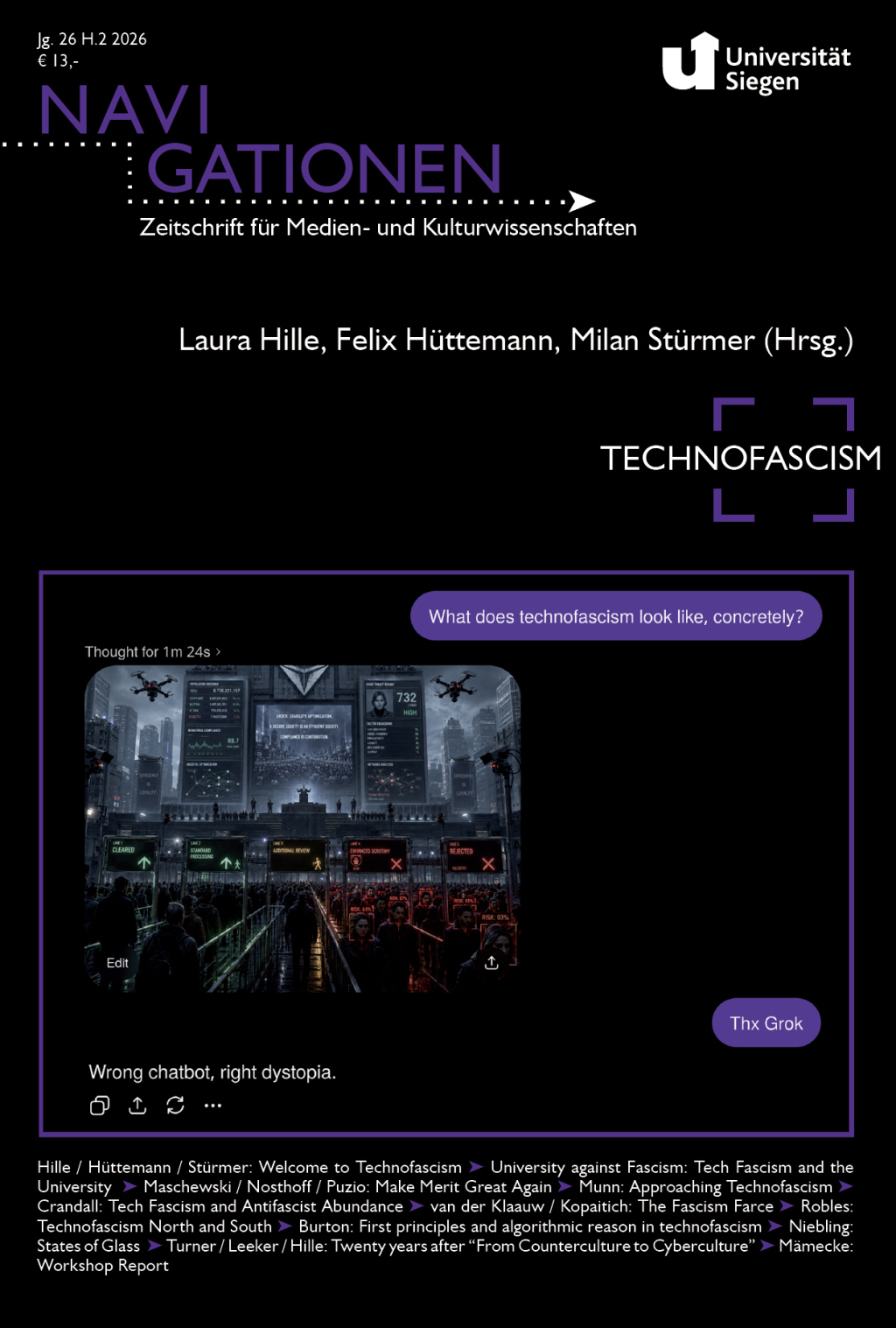
COMING SOON...
Once-obscure connections between reactionary thought and the tech world have moved from subcultural margins into policy, institutions, and the infrastructures of everyday life. This issue approaches technofascism as a contested constellation in which technical systems and technological imaginaries are mobilised in the service of hierarchy and exclusion. Its contributions examine this constellation across infrastructures, epistemologies, affects, political economy, race and gender, colonial extraction, and attacks on democratic institutions, testing both the analytical force and the limits of the term "technofascism“.
Einst kaum bekannte Verbindungen zwischen reaktionärem Denken und der Tech-Welt haben sich von den Rändern der Subkulturen in die Politik, in Institutionen und in die Infrastrukturen des Alltags verlagert. Diese Ausgabe betrachtet den Technofaschismus als umstrittene Konstellation, in der technische Systeme und technologische Vorstellungswelten im Dienste von Hierarchien und Ausgrenzung mobilisiert werden. Die Beiträge untersuchen diese Konstellation unter den Gesichtspunkten von Infrastrukturen, Erkenntnistheorien, Affekten, politischer Ökonomie, Rasse und Geschlecht, kolonialer Ausbeutung sowie Angriffen auf demokratische Institutionen und prüfen dabei sowohl die analytische Kraft als auch die Grenzen des Begriffs „Technofaschismus“.
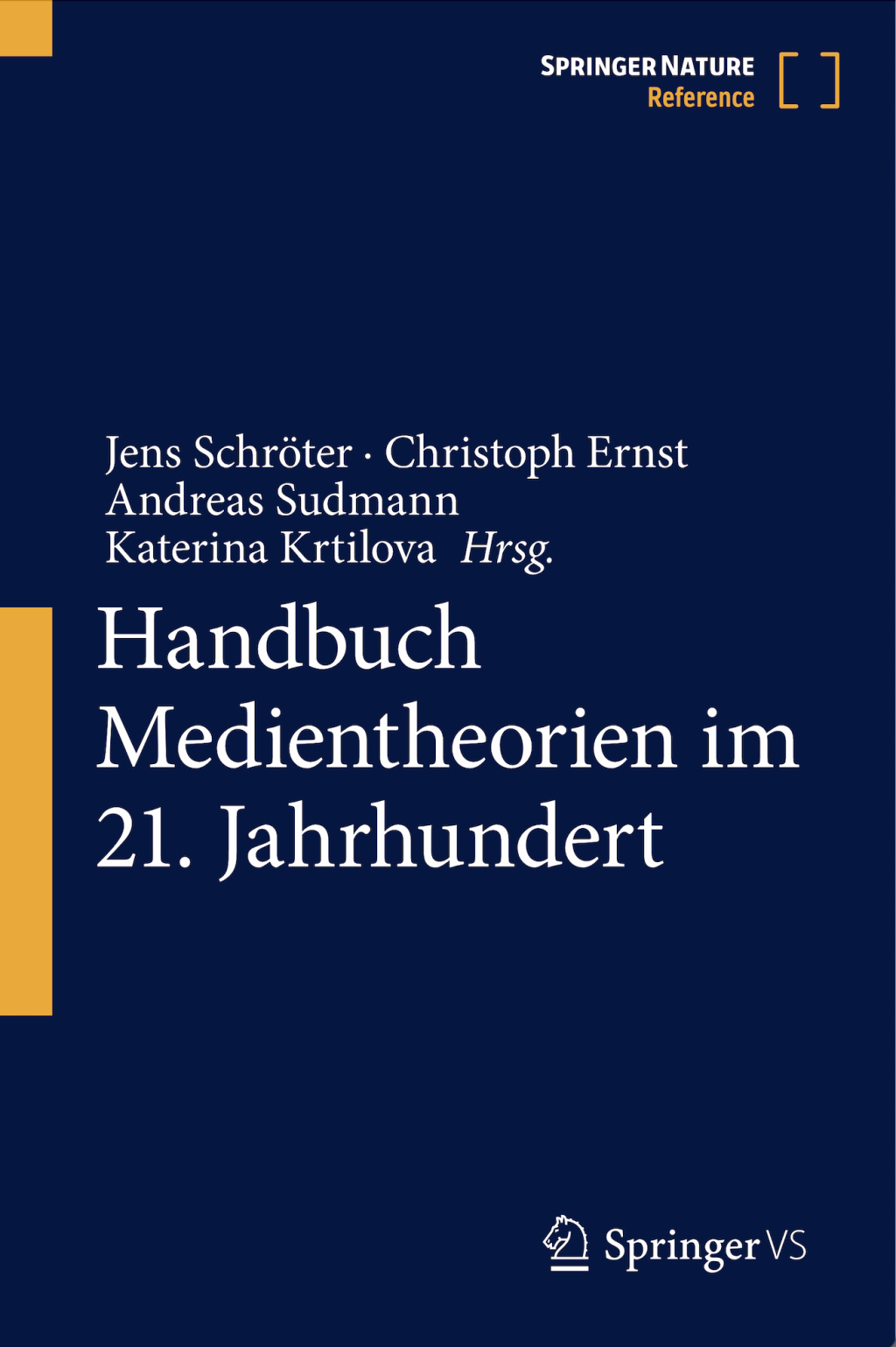
Handbuch Medientheorien im 21. Jahrhundert
Online Version finished, Print and Translation into English in Preparation!
Printversion including a foreword in preparation!
The English translation is in the works!


